What you actually get, by category.
Short answer: there is no central capital subsidy for commercial or industrial rooftop solar in India. The subsidy most people have heard of — PM Surya Ghar Muft Bijli Yojana — is residential-only, capped at ₹78,000. Commercial and industrial buyers instead get 40% accelerated depreciation in year one, a tax benefit that, on a sizeable system, is often worth more in absolute rupees than the ₹78,000 residential subsidy cap, plus GST input credit. State-level incentives beyond this are narrow, conditional, and change often — treat anything beyond the two schemes below as something to verify directly with your state nodal agency, not something to bank on from a website.
Residential: PM Surya Ghar Muft Bijli Yojana
₹30,000/kW for the first 2kW, ₹18,000 for the 3rd kW, capped at ₹78,000 for systems 3kW and above. Special-category states (North-East, hill states) get a higher cap of ₹85,800. Central scheme, disbursed after commissioning via the national portal — typically adjusted against the installer's invoice so the homeowner doesn't front the full amount and wait for reimbursement.
Does not apply to commercial or industrial connections, regardless of system size.
C&I: 40% accelerated depreciation
Under Section 32 of the Income Tax Act (Appendix I, Part A, Block 8(ix)(l)), businesses can depreciate 40% of a solar asset's cost against taxable income in the first year — reduced from 80% in a 2017 revision, unchanged since. This is a tax shield, not a cheque: it only has value against business income you're actually paying tax on.
No equivalent capital subsidy exists for this category — this is the real lever, which is why our calculator applies it instead of a cash subsidy for commercial/industrial inputs.
Also relevant to the real cost, for every category
- GST: solar panels and inverters carry 5% GST (reduced from 12% in September 2025). The blended rate for a bundled EPC contract (hardware + installation as one composite supply) is less settled across sources — get a specific quote from your EPC contractor rather than assuming a single number.
- Net metering: this isn't a subsidy, but the cap on how much capacity your DISCOM lets you export/offset against the grid directly limits system size for larger C&I sites — see the state table below.
- Financing: SIDBI and other institutions offer concessional green-energy loan schemes for MSMEs, worth checking against your bank's standard commercial rate before financing a system at full market interest.
Net metering caps, by state
The ceiling on how much solar capacity you can connect for net metering — not a subsidy, but it directly constrains how large a C&I system can be before gross metering (selling, not offsetting) kicks in. Confirm the current figure with your DISCOM before sizing a system near the limit.
| State | Net metering cap | Notes |
|---|---|---|
| Maharashtra | Up to 5 MW or sanctioned load, whichever is lower | Cumulative capacity on one distribution transformer capped at 70% of its rating. |
| Gujarat | Up to 1 MW (net metering); gross metering above that | Distribution-transformer cap of 30% of its rating. |
| Tamil Nadu | Up to 1 MW | Covers the practical range of almost all C&I rooftop projects. |
| Rajasthan | Up to 100% of sanctioned load | No fixed MW ceiling for C&I consumers under current rules. |
| Uttar Pradesh | Up to 100% of sanctioned load | Distribution-transformer cap of 75% of its rating. |
| Haryana | Up to 500 kW | Confirm current figure with the DISCOM — state rules revise periodically. |
Common questions
Is there a government subsidy for commercial or industrial rooftop solar?
No — there is no central capital subsidy for commercial or industrial buyers. PM Surya Ghar Muft Bijli Yojana, the scheme most people mean when they ask about "the solar subsidy," is residential-only. What C&I buyers get instead is 40% accelerated depreciation (a tax benefit, not a cash subsidy) plus GST input tax credit on the system.
How much is the residential solar subsidy?
₹30,000/kW for the first 2kW and ₹18,000 for the 3rd kW, capped at ₹78,000 regardless of system size beyond 3kW — ₹85,800 in special-category states (the North-Eastern and Himalayan states). It applies to residential rooftop only, disbursed after commissioning through the national portal, usually adjusted against the installer's invoice.
What is accelerated depreciation and who can claim it?
Under Section 32 of the Income Tax Act, businesses can depreciate 40% of a solar asset's value in the first year (down from 80% before a 2017 revision, unchanged since). It only offsets business income, so it benefits commercial and industrial buyers with taxable profit to shelter — not individual homeowners, who have no business income to claim it against.
Do state governments offer additional solar incentives?
A few states offer narrow, conditional benefits — Maharashtra's electricity duty exemption requires pairing solar with battery storage and open access, for instance — but we have not found a general-purpose state capital subsidy for C&I solar that applies broadly. Net metering caps (how much capacity you can export to the grid) vary significantly by state and matter more for most C&I projects than any subsidy. Always confirm current scheme status with your state nodal agency before relying on a number from any website, including this one.
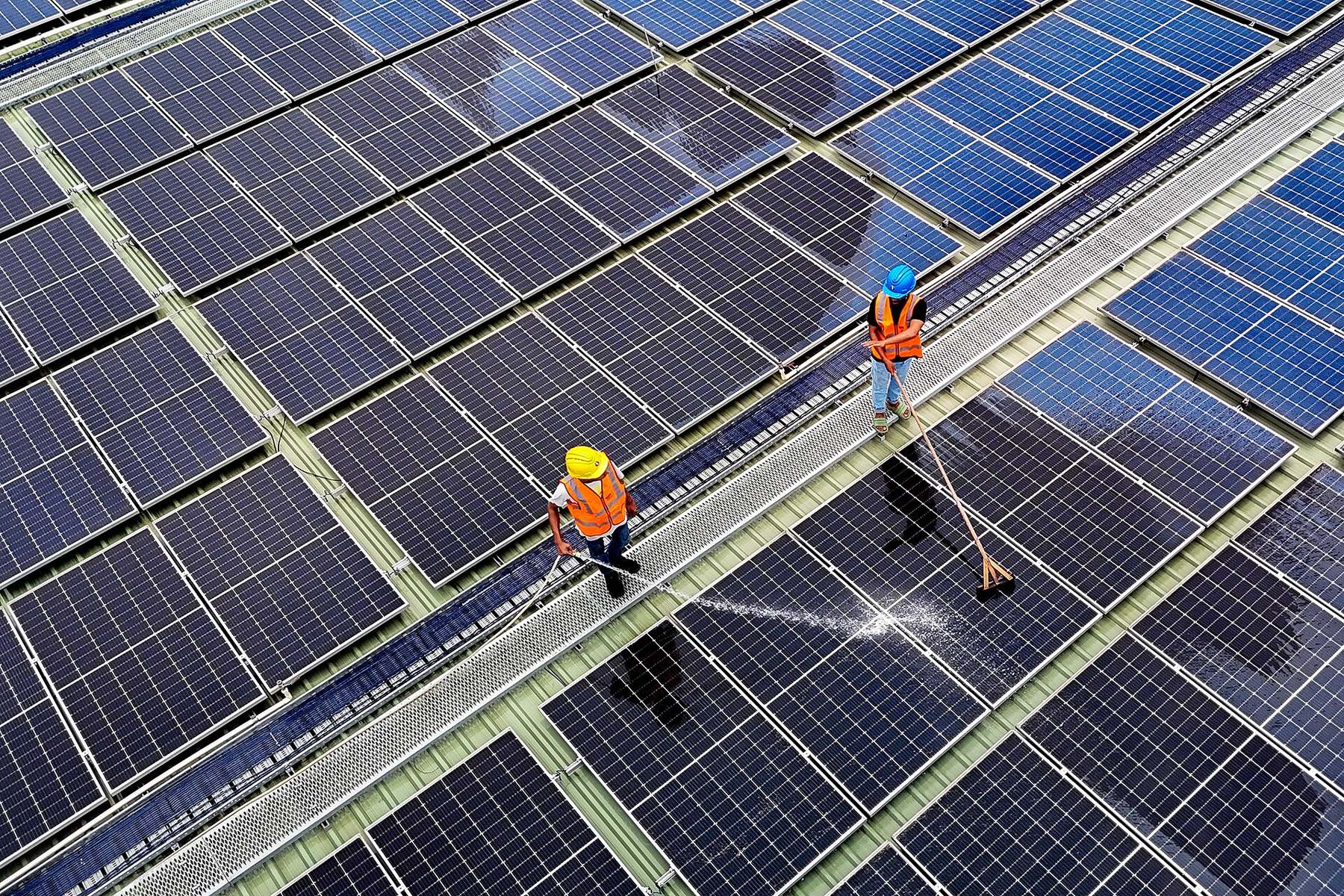
Banner photo: "Powering Progress 2" by Ayman Nakib Badhan, Wikimedia Commons, CC BY-SA 4.0 — illustrative, not a Vivana Solar project.