CAPEX vs RESCO/OPEX.
Short answer: choose CAPEX if your facility can fund the upfront cost and you want the lowest total cost of energy over the system's life. Choose RESCO/OPEX if you want savings starting day one with zero capital outlay, and you're comfortable paying a fixed per-unit tariff to a third-party owner for the contract term. Most C&I buyers we work with choose based on balance-sheet strategy, not just economics — treat this page as a starting framework, not a final answer for your specific numbers.
| Factor | CAPEX | RESCO / OPEX |
|---|---|---|
| Who owns the system | You, from commissioning | The developer (e.g. Vivana Solar) for the contract term |
| Upfront cost | Full system cost, paid or financed by you | ₹0 — developer funds construction |
| What you pay monthly | Near-zero generation cost; existing loan EMI if financed | A fixed ₹/unit tariff under a long-term PPA, below your grid tariff |
| Maintenance responsibility | Yours (typically via a separate O&M contract) | Developer's — it's in their interest to keep output high |
| Performance risk | Yours — if output underperforms, you absorb it | Developer's — they're paid per unit generated |
| Typical contract term | N/A (you own it outright) | 10–25 years, often with a buyout option after a minimum term |
| Balance sheet impact | Capital asset + depreciation; possible loan liability | Typically an operating expense, not a capex/liability line — confirm with your accountant |
| Best suited for | Facilities with available capital wanting the lowest lifetime cost | Facilities prioritising immediate savings with no capital deployment |
Assumptions behind this comparison
- "Lower total cost" for CAPEX assumes the facility can either pay upfront or secure financing at a reasonable rate — a loan at a high interest rate can erode or reverse this advantage.
- RESCO tariffs are typically set below the prevailing grid/DISCOM tariff, but the exact discount depends on your DISCOM, consumption category and contract length.
- Accounting treatment of RESCO/PPA contracts varies by business structure and applicable accounting standard — this page is not financial or accounting advice.
Common questions
Which model is cheaper overall — CAPEX or RESCO?
CAPEX is almost always cheaper over the system’s full life, since you avoid paying a margin on every unit of energy for 15–25 years. RESCO is cheaper on day one (zero upfront cost) and immediately reduces your energy cost versus grid tariff, but you pay a per-unit tariff for the contract term instead of owning the asset outright.
Can we switch from RESCO to ownership later?
Most RESCO/PPA contracts include a buyout clause after a minimum term (commonly 5–10 years), letting you purchase the system at a depreciated value. Confirm this is in writing before signing — not every RESCO contract includes it.
Who is responsible for maintenance under each model?
Under RESCO, the developer (e.g. Vivana Solar) owns, operates and maintains the system for the contract term — it’s in their interest to keep it performing, since their revenue depends on generation. Under CAPEX, maintenance is the owner’s responsibility, typically covered by a separate O&M contract.
Does RESCO show up as debt on our balance sheet?
Generally no — RESCO/PPA structures are typically treated as an operating expense (energy purchased), not a capital asset or liability, though the exact accounting treatment depends on contract terms and your accounting standards. Confirm with your finance team.
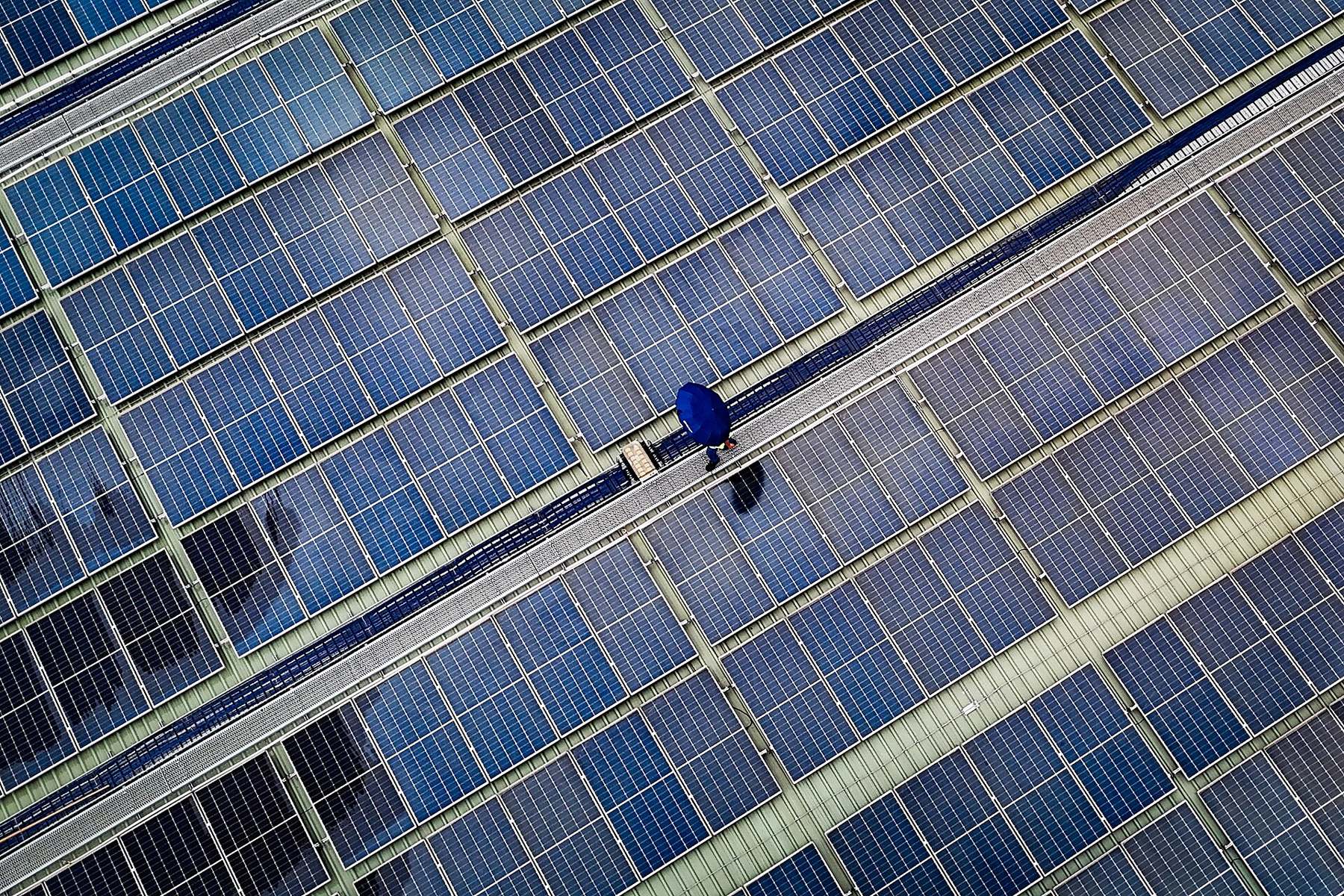
Banner photo: "Powering Progress" by Ayman Nakib Badhan, Wikimedia Commons, CC BY-SA 4.0 — illustrative, not a Vivana Solar project.